
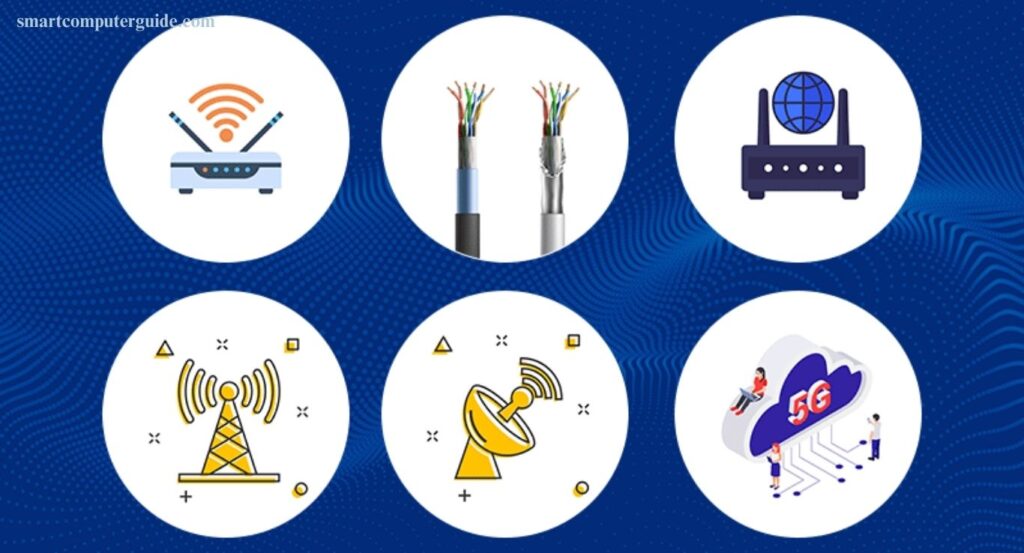
Internet connections come in various types, from traditional dial-up and DSL to modern fiber optics and 5G, each offering different speeds, costs, and reliability. Choosing the right connection is essential for faster work, seamless online learning, and smooth streaming or gaming. While some options are budget-friendly, others provide high-speed performance for demanding tasks. Knowing the differences helps you make an informed decision and maximize your internet experience.
Explore our comprehensive guide on “What is Internet in Computers?” to understand each type, compare features, and pick the best connection that fits your needs and lifestyle.
Read More: Characteristics of Computer – Speed, Accuracy & More
Different Types of Internet Connections
Internet access comes in various forms, each offering unique speed, reliability, and cost. Common types include:
- Dial-up Connection
- Broadband Connection
- DSL (Digital Subscriber Line)
- Cable Internet
- Fiber-optic Internet
- Wireless Internet (Wi-Fi)
- Mobile Internet (3G, 4G, 5G)
- Satellite Internet
- ISDN (Integrated Services Digital Network)
Dial-up Connection
Dial-up is one of the earliest internet types, connecting through a telephone line and modem. Users couldn’t use the phone and internet simultaneously, and speeds were very slow. Despite its limitations, dial-up was widely used when no other options were available.
Broadband Connection
Broadband offers faster speeds than dial-up and allows simultaneous phone and internet use. Its higher speed makes web browsing, video streaming, and online work smoother, making it popular in homes and offices.
DSL (Digital Subscriber Line)
DSL also uses telephone lines but transmits digital signals, providing faster, more stable internet. Users can talk on the phone while online. It’s ideal for homes and small offices due to easy setup and reliable speed.
Cable Internet
Cable internet uses TV cables to deliver high-speed connections via a cable modem. It supports streaming, gaming, and downloads effectively, though speed may slow when many users share the same network.
Fiber-optic Internet
Fiber-optic internet delivers ultra-fast, stable speeds using thin glass or plastic cables that transmit data as light. It’s perfect for streaming, gaming, video calls, and online learning without buffering.
Wireless Internet (Wi-Fi)
Wi-Fi provides internet without wires using a wireless router. Devices like laptops, phones, and tablets connect easily. Wi-Fi is common in homes, schools, offices, and public areas, supporting multiple users simultaneously.
Mobile Internet (3G, 4G, 5G)
Mobile internet uses SIM cards and towers to connect devices. 3G offered basic speeds, 4G improved streaming and apps, and 5G delivers ultra-fast performance for multiple devices, offering internet access anywhere.
Satellite Internet
Satellite internet relies on satellites and a small dish to provide connectivity in remote areas where cables are unavailable. Speeds are decent but may slow in bad weather.
ISDN (Integrated Services Digital Network)
ISDN transmits voice and data over digital telephone lines. Faster than dial-up but slower than DSL or cable, it’s largely outdated due to modern high-speed internet options.
Frequently Asked Questions
What is a dial-up internet connection?
Dial-up connects to the internet using a telephone line and modem. It is very slow and cannot be used alongside phone calls.
How is broadband different from dial-up?
Broadband is faster, always-on, and allows simultaneous internet and phone use, making it ideal for homes and offices.
What is DSL internet?
DSL transmits digital signals through phone lines, providing stable, faster speeds and supporting simultaneous phone use.
How does cable internet work?
Cable internet uses TV cables and a modem to deliver high-speed connectivity suitable for streaming, gaming, and downloads.
Why is fiber-optic internet so fast?
Fiber-optic internet uses thin cables that transmit data as light, offering ultra-fast, stable connections for streaming, gaming, and online work.
What is Wi-Fi?
Wi-Fi is wireless internet provided via a router, allowing multiple devices to connect without cables in homes, schools, and public places.
How does mobile internet work?
Mobile internet uses SIM cards and mobile towers. 3G, 4G, and 5G provide increasing speeds and connectivity anywhere.
What is satellite internet?
Satellite internet connects via satellites and a dish, offering access in remote areas where cables cannot reach, though weather may affect speed.
What is ISDN internet?
ISDN is an older connection type that sends voice and data over digital phone lines. It is slower than DSL, cable, or fiber and rarely used today.
Conclusion
Choosing the right internet connection is essential for a smooth online experience. From traditional dial-up and ISDN to modern fiber-optic and 5G, each type offers unique speeds, reliability, and costs. Homes, offices, and remote areas have different needs, so understanding these options helps you select the best connection for browsing, streaming, gaming, or work. Modern solutions like fiber and 5G provide ultra-fast, stable internet, while options like satellite ensure connectivity in hard-to-reach locations. Explore your choices carefully to enjoy seamless online access and maximize productivity, entertainment, and learning.