
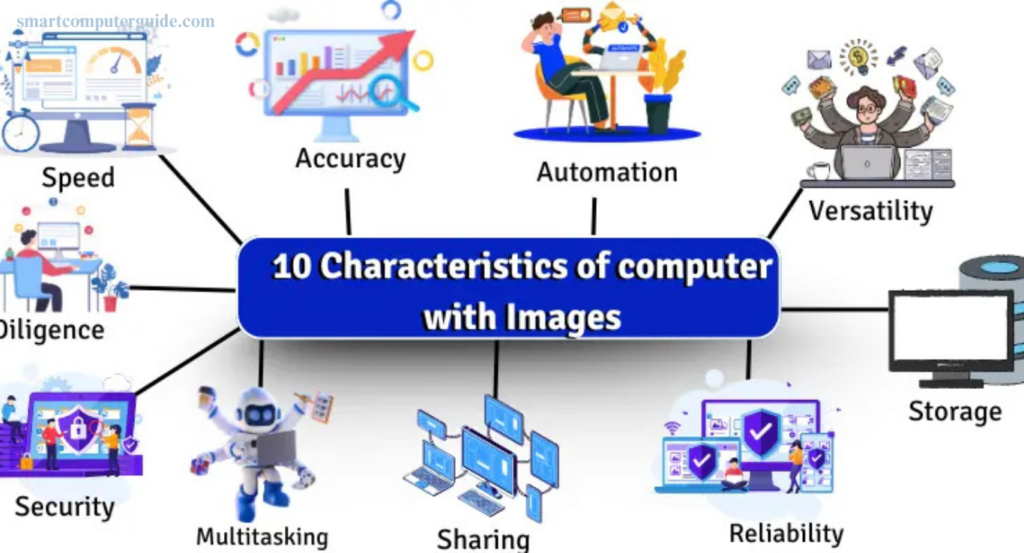
Curious about what makes computers so powerful? Key characteristics of computers explain their unique capabilities. Exceptional speed allows computers to process vast amounts of data in seconds, while accuracy ensures reliable results. Large storage capacity helps store and manage information efficiently. Automation enables computers to perform tasks with minimal human intervention, increasing productivity.
Versatility allows them to support countless applications, from education and business to entertainment and research. Reliability ensures consistent performance over long periods of use. These characteristics make computers essential tools in modern life, helping individuals and organizations work faster, smarter, and more efficiently in an increasingly digital world. Understanding these features highlights their true technological power.
Read More: What is Computer? Everything You Need to Know
What Are the Characteristics of a Computer?
Computers have unique features that make them essential in modern life. High processing speed allows them to complete tasks quickly, while accuracy ensures reliable results. Ability to perform multiple tasks at the same time improves efficiency and productivity. Large storage capacity enables computers to keep vast amounts of data organized and secure. These powerful capabilities make computers widely used in schools, offices, and homes for learning, work, and daily activities.
10 Characteristics of a Computer
Computers include many powerful features that support work, learning, and everyday tasks. These characteristics explain why computers remain fast, efficient, and reliable in modern environments.
- Speed
- Accuracy
- Automation
- Versatility
- Storage
- Reliability
- Security
- Diligence
- Multitasking
- Sharing
Speed
High processing speed makes computers powerful calculation devices. Modern computers complete millions or even billions of operations within seconds. Processing speed is usually measured in megahertz (MHz) or gigahertz (GHz), showing how fast a processor performs tasks. Faster speed allows computers to analyze large data sets, run complex programs, and deliver results almost instantly.
Example: Supercomputers analyze massive weather data to forecast weather conditions quickly and accurately.
Fact: The fastest supercomputers can perform hundreds of quadrillions of calculations per second.

Accuracy
Accuracy refers to a computer’s ability to perform tasks and produce correct results. Computers follow given instructions exactly, which helps them deliver highly precise outcomes. When users provide correct data and commands, computers complete calculations with near-perfect accuracy.
Example: Space organizations use computers during space missions to perform precise calculations and ensure successful operations.
Fact: Medical technology uses computers in robotic surgeries to improve precision and patient safety.

Automation
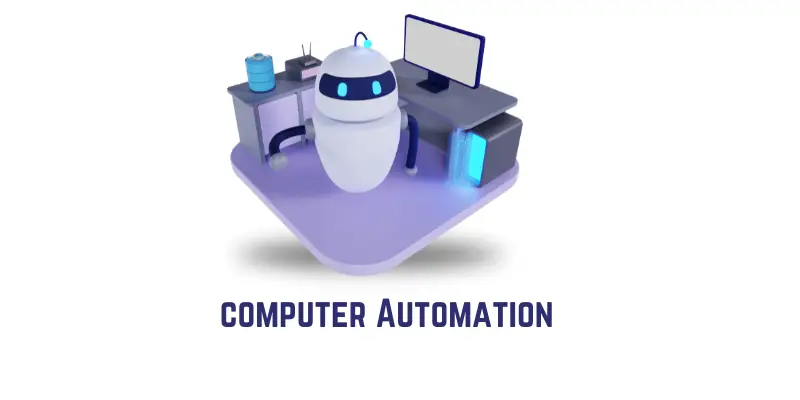
Automation allows computers to perform tasks automatically after receiving instructions. Once programmed, a computer can run processes without continuous human control. Automation improves efficiency and saves time in many digital systems.
Example: Automatic bill payments, scheduled emails, and smart home devices operate through computer automation.
Fact: One of the earliest automatic computers, Harvard Mark I (1944), was large enough to fill an entire room.
Versatility
Versatility means a computer can perform many different tasks using the same system. Users can write documents, watch videos, design graphics, play games, or communicate online with a single device. This flexibility makes computers useful in education, business, and entertainment.

Storage
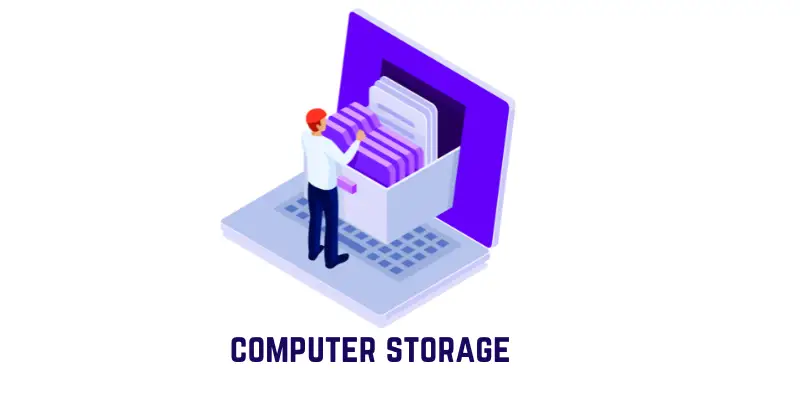
Storage refers to a computer’s ability to save data, programs, and files for future use. Modern computers can store massive amounts of information such as documents, photos, videos, and applications.
Example: A 1TB hard drive can store about 250,000 songs or around 500 hours of HD video.
Fact: The first hard drive in 1956 was the size of a refrigerator and stored only 5MB of data.
Reliability
Reliability describes a computer’s ability to work consistently for long periods without errors. Organizations rely on computers to perform critical operations accurately and efficiently.
Example: Banks use computer systems to process thousands of financial transactions daily.
Fact: Some early space-mission computers are still studied today for research and historical purposes.
Security
Security protects computer systems and data from unauthorized access. Modern computers include security features such as passwords, encryption, and authentication systems to keep information safe.
Example: Online banking platforms use strong encryption to protect user accounts and financial data.
Fact: The first known computer virus, Creeper, appeared in 1971.
Diligence
Diligence means a computer can work continuously without losing accuracy or performance. Unlike humans, computers do not get tired and can perform repetitive tasks for long periods.
Example: Weather prediction systems run continuously to analyze climate data and forecast conditions.
Multitasking
Multitasking allows a computer to run multiple programs at the same time. Users can listen to music, edit documents, and browse the internet simultaneously.
Fact: Early computers handled only one task at a time, while modern systems can manage many processes simultaneously.
Sharing
Sharing enables computers to exchange data through networks and digital platforms. Users can quickly send files, documents, and media between devices.
Example: Cloud services allow people to share and access documents instantly from different locations.
Fact: Decades ago, sending a small file could take hours, but modern networks transfer gigabytes of data within seconds.

Frequently Asked Questions
What makes a computer fast?
A computer’s speed comes from its processor, which can perform millions or billions of calculations per second.
How accurate are computers?
Computers deliver precise results when given correct data and instructions, minimizing human errors.
What is computer automation?
Automation allows computers to perform tasks automatically after being programmed, without continuous human intervention.
How do computers store data?
Computers store information, files, and programs on hard drives, SSDs, or cloud storage for future use.
Can computers perform multiple tasks at once?
Yes, multitasking allows computers to run several programs simultaneously without slowing down.
How secure is computer data?
Data security is ensured through passwords, encryption, and authentication to prevent unauthorized access.
Why are computers versatile?
Computers can perform diverse tasks, from work and learning to entertainment and communication, making them highly flexible.
Conclusion
Computers have transformed modern life with their unique characteristics. High speed, accuracy, automation, and multitasking make them efficient and reliable tools. Their storage, security, versatility, and diligence further enhance productivity across homes, schools, and workplaces. By understanding these key features, we can appreciate why computers remain essential in today’s digital world, helping individuals and organizations work smarter, faster, and more effectively.