
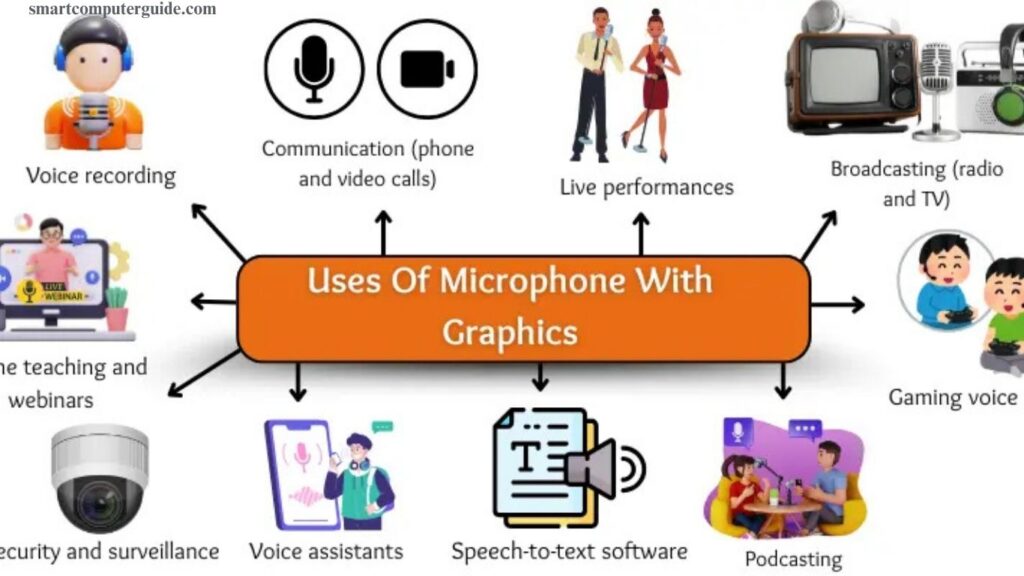
Microphones are essential tools in modern communication and technology, transforming sound into electronic signals for various purposes. From recording music and podcasts to enabling clear audio in video production, microphones play a crucial role in capturing high-quality sound. They are widely used in public speaking, broadcasting, and telecommunication, ensuring voices reach audiences clearly and effectively.
Additionally, microphones are integral to devices like smartphones, hearing aids, and voice-activated assistants, making daily life more convenient. Understanding the practical applications of microphones highlights their versatility and importance across professional, educational, and personal settings.
Read More: Types of Keyboard Keys: Functions and Uses Explained
Uses of Microphones
Microphones allow us to hear and record sounds clearly, making communication, entertainment, and learning much easier. They are widely used in daily life, from casual activities to professional applications. Common uses of microphones include:
- Voice recording
- Communication (phone and video calls)
- Broadcasting (radio and TV)
- Live performances
- Public speaking
- Online teaching and webinars
- Gaming voice chat
- Voice assistants (Alexa, Siri)
- Security and surveillance
- Telemedicine consultations
- Podcasting
- Language learning and pronunciation practice
- Speech-to-text software
Voice Recording
Microphones capture voices clearly for recording. Whether talking or singing, they send sound to phones, computers, or recorders, allowing users to save and replay it later. Singers, YouTubers, teachers, and students often use microphones to record lessons, practice, or content creation.
Communication (Phone and Video Calls)
Microphones make long-distance communication clear. They capture your voice during phone and video calls and transmit it instantly, making conversations smooth and easy.
Broadcasting (Radio and TV)
Microphones ensure voices reach large audiences during radio and TV shows. News reporters, singers, and actors rely on them to deliver clear sound to listeners and viewers.
Live Performances
In concerts and stage shows, microphones amplify voices so audiences can hear every word or note. They make performances clear, loud, and engaging.
Public Speaking
Microphones help speakers project their voice to large audiences. Teachers, leaders, and presenters can speak without straining, ensuring everyone hears them clearly.
Online Teaching and Webinars
Microphones allow teachers to communicate effectively in online classes and webinars. Students can hear lessons clearly, making learning seamless and interactive.
Gaming Voice Chat
Gamers use microphones to coordinate with teammates, share strategies, and enhance the gaming experience. Voice chat creates teamwork and makes gameplay more immersive.
Voice Assistants (Alexa, Siri)
Microphones enable voice assistants like Alexa and Siri to understand commands. They respond to questions, play music, or provide updates, making devices easier to use.
Security and Surveillance
Microphones in security systems record sounds like voices or footsteps. They help monitor areas effectively and provide evidence for investigations when needed.
Telemedicine Consultations
Microphones allow doctors and patients to communicate remotely. Telemedicine uses clear audio for consultations, helping people access medical care without visiting a clinic.
Podcasting
Podcasters use microphones to produce high-quality audio content. Clear sound ensures listeners understand every word, making podcasts engaging and professional.
Language Learning and Pronunciation Practice
Microphones let learners record and listen to their own voices, improving pronunciation and fluency. They make language practice interactive and effective.
Speech-to-Text Software
Microphones enable speech-to-text tools to convert spoken words into written text. They help users write faster and more efficiently without typing.
Frequently Asked Questions
What is the main purpose of a microphone?
A microphone captures sound and converts it into electrical signals for recording, broadcasting, communication, or amplification.
How do microphones help in online teaching?
Microphones ensure teachers’ voices are clear during online classes and webinars, making learning easy and effective for students.
Can microphones improve gaming experiences?
Yes, microphones allow gamers to communicate with teammates in real-time, enhancing teamwork and overall gameplay.
Are microphones used in healthcare?
Absolutely. Microphones enable telemedicine consultations, allowing doctors to communicate clearly with patients remotely.
How do microphones work with voice assistants like Alexa or Siri?
Microphones capture your voice commands, enabling assistants to understand and respond accurately to tasks or questions.
Can microphones help with language learning?
Yes, learners can record and listen to their pronunciation, improving speaking skills and fluency.
What types of professionals use microphones?
Singers, teachers, podcasters, broadcasters, public speakers, and gamers commonly use microphones.
How are microphones used in security and surveillance?
Microphones record ambient sounds like voices or footsteps, helping monitor areas and provide evidence when needed.
Conclusion
Microphones are versatile tools that enhance communication, entertainment, education, and safety. From recording voices and podcasts to enabling online teaching, gaming, telemedicine, and public speaking, their applications are vast and essential. They also power voice assistants, speech-to-text software, and security systems, making daily life more convenient and efficient. Understanding the practical uses of microphones highlights their importance in modern technology and professional settings.