
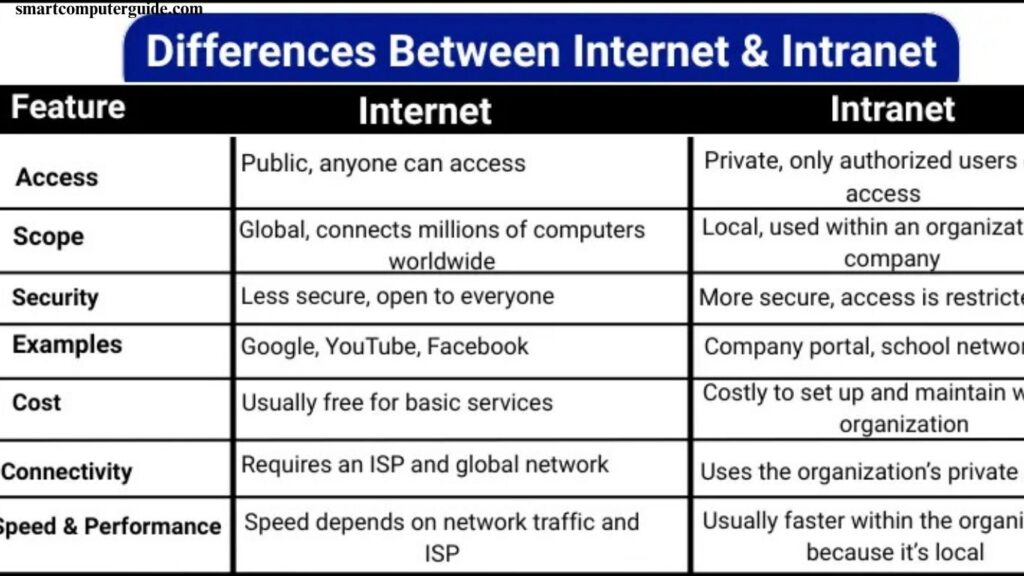
The Internet links over 5 billion people globally, offering access to information, communication, and services for everyone. In contrast, an Intranet is a private network designed for a specific organization or group, providing secure internal communication and resources. Understanding the distinction between the Internet and Intranet is essential, as each serves a unique purpose.
While the Internet connects the world, the Intranet focuses on internal efficiency, collaboration, and information sharing within an organization. This article breaks down these differences in simple terms, helping you quickly understand how each network operates and why they matter.
Read More: Troubleshooting in computer
Differences Between Internet and Intranet
The Internet connects users worldwide for public access to information and services. An Intranet, however, is a private network within an organization, enabling secure communication and resource sharing. Understanding these differences clarifies how each network works and their distinct purposes.
- Access
- Scope
- Purpose
- Security
- Examples
- Cost
- Connectivity
- Content Control
- Communication
- Speed & Performance
Access
Access determines who can use a network, and the Internet and Intranet differ significantly.
Internet:
The Internet is public, available to anyone with a device and connection. Users can browse websites, watch videos, play online games, and access information from anywhere—home, school, or office.
Intranet:
An Intranet is private, restricted to specific users like employees or organization members. Access requires a secure login, ensuring safe internal communication and resource sharing within the organization.
Scope
Scope defines how far a network can reach, and the Internet and Intranet differ greatly.
Internet:
The Internet has a global reach, connecting millions of computers worldwide. Users can access websites, share information, and communicate across countries instantly.
Intranet:
An Intranet has a local scope, limited to a company, school, or organization. Only authorized members can use it, and it does not extend beyond the organization, ensuring secure internal communication and resource sharing.
Purpose
Purpose defines why a network is used, and the Internet and Intranet have distinct goals.
Internet:
The Internet allows people to share information globally. It supports learning, communication, shopping, and entertainment, giving anyone access to information and enabling worldwide connections.
Intranet:
An Intranet focuses on internal information sharing within a group or organization. It provides secure access for employees or students, allowing safe collaboration and resource sharing while keeping data private.
Security
Security measures differ significantly between the Internet and Intranet.
Internet:
The Internet is less secure since information is publicly accessible. Without protection, data can be exposed, and hackers may steal sensitive information. Users rely on passwords, antivirus software, and encryption to stay safe.
Intranet:
An Intranet is highly secure, restricted to authorized users only. Organizations control access and protect internal data, ensuring company or school information remains private and safe for internal communication and collaboration.
Examples
Examples show how networks are used in real life.
Internet:
The Internet includes public websites and apps accessible to everyone, such as Google, YouTube, and Facebook. It also supports online shopping, gaming, learning, and communication for anyone with a connection.
Intranet:
An Intranet consists of private systems used within organizations. Examples include a company’s internal portal, a school’s private network, or a hospital’s staff system. These networks are restricted to authorized users and are not accessible to the public.
Cost
Cost refers to the expenses involved in setting up and using a network.
Internet:
Accessing the Internet is generally low-cost or free. Users only need a device and an internet connection, while most websites, apps, and videos are freely available.
Intranet:
Setting up an Intranet can be expensive. Organizations invest in servers, specialized software, maintenance, and security. Although limited to internal users, the cost ensures privacy, data protection, and secure collaboration.
Connectivity
Connectivity defines how a network links devices and users.
Internet:
The Internet connects devices globally. Users can browse websites, send emails, and chat from anywhere using a computer, phone, or tablet with an internet connection.
Intranet:
An Intranet links devices within a company, school, or organization. It enables secure file sharing and collaboration among authorized users, while preventing access from outsiders.
Content Control
Content control determines who manages and regulates information on a network.
Internet:
Anyone can create and share content on the Internet. Websites, blogs, and social media posts are publicly accessible, and no single entity controls all information.
Intranet:
An organization manages content on an Intranet. Only authorized users can post or edit information, ensuring that files, messages, and documents remain secure, accurate, and accessible only to the intended group.
Communication
Communication defines how people share information through a network.
Internet:
The Internet enables global communication. Users can send emails, chat online, or post on social media to connect with friends, family, or colleagues anywhere in the world.
Intranet:
An Intranet supports private communication within an organization. Employees or students can exchange messages, share files, and collaborate securely, keeping discussions and resources safe from outsiders.
Speed & Performance
Speed and performance measure how quickly a network operates and handles tasks.
Internet:
Internet speed varies depending on traffic, connection type, and service provider. High usage can slow website loading and online activities.
Intranet:
An Intranet offers fast, reliable performance within an organization. Limited users and controlled access ensure quick loading of pages and files, providing smooth internal communication and collaboration.
Frequently Asked Questions
What is the main difference between the Internet and an Intranet?
The Internet is a public global network connecting billions of users, while an Intranet is a private network used within an organization.
Who can access the Internet and Intranet?
The Internet is open to everyone with a device and connection. An Intranet is restricted to authorized employees or members.
What is the purpose of each network?
The Internet shares information globally for learning, communication, and entertainment. Intranets focus on secure internal communication and collaboration.
How secure are the Internet and Intranet?
The Internet is less secure and relies on passwords and antivirus protection. Intranets are highly secure, with controlled access for authorized users.
What are examples of Internet and Intranet?
- Internet: Google, YouTube, Facebook.
- Intranet: Company portals, school networks, hospital staff systems.
How do they differ in speed and performance?
Internet speed varies with traffic and connection type. Intranets are faster due to limited users and controlled access.
How is content controlled on each network?
The Internet allows anyone to post content publicly. Intranets are managed by the organization, ensuring secure, accurate internal information.
Conclusion
Understanding the differences between the Internet and Intranet is essential for both individuals and organizations. The Internet connects the world, offering public access to information, communication, and services. In contrast, an Intranet provides a secure, private network for internal collaboration, resource sharing, and controlled communication.