
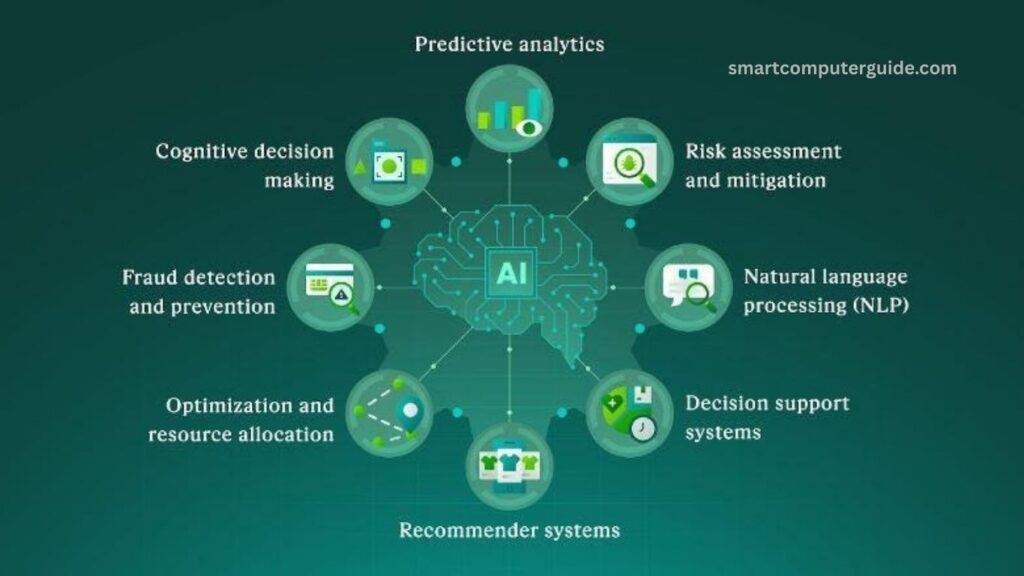
AI-driven systems for legal decision support are transforming the way law professionals analyze cases, predict outcomes, and make informed decisions. By leveraging artificial intelligence, machine learning, and data analytics, these systems can quickly process large volumes of legal documents, identify patterns, and provide actionable insights.
This technology helps lawyers, judges, and legal teams save time, reduce errors, and improve efficiency, making complex legal processes more accurate and data-driven. As AI continues to evolve, its role in the legal industry is expanding, offering smarter solutions for decision-making and risk assessment.
Read More: AI-Powered Legal Decision Support Systems
What Are AI Legal Decision Support Systems?
AI legal decision support systems are artificial intelligence-powered tools that assist lawyers in evaluating options, assessing risks, and selecting the best legal strategies. Unlike simple automation tools, these systems focus on analysis and guidance, offering recommendations, probability assessments, scenario comparisons, and insights while leaving the final decision to human judgment.
Why Legal Decision-Making Needs AI Support
Modern legal practice faces increasing complexity due to:
- Massive volumes of legal data to process
- Rapidly changing laws and regulations
- Cost-sensitive and risk-aware clients
- Cross-border and multi-jurisdictional issues
Relying solely on intuition or memory of precedents is no longer enough. AI legal decision support provides structured insights, helping lawyers make informed, efficient, and accurate decisions.
How AI Legal Decision Support Systems Work
Data Aggregation
AI legal decision support systems gather and organize data from multiple sources to create a comprehensive decision context, including:
- Case law and court judgments
- Litigation histories
- Contract repositories
- Regulatory actions
- Internal matter data
Pattern Analysis and Modeling
Using machine learning, these systems identify patterns to predict outcomes and assess risks, such as:
- Results of similar cases
- Risks associated with specific clauses or actions
- Likelihood of enforcement under particular regulations
Scenario Comparison
Advanced AI legal DSS enables lawyers to compare different strategies and scenarios, for example:
- Litigate vs. settle
- Clause A vs. Clause B
- Compliance option X vs. Y
Each scenario is evaluated based on risk, cost, and probability of success, helping lawyers make informed, data-driven decisions.
Key Use Cases of AI Legal Decision Support
Litigation Strategy Decisions
AI legal DSS helps lawyers assess critical factors such as:
- Probability of success
- Expected duration and cost
- Judge- or court-specific trends
This enables more realistic advice, better case planning, and stronger alignment with client expectations.
Contract Negotiation Strategy
Decision support tools analyze contract language to:
- Score potential risks
- Suggest alternative clauses
- Predict the likelihood of disputes
- Lawyers can negotiate from a position of data-backed strength, minimizing risk and improving outcomes.
Regulatory and Compliance Decisions
For compliance matters, AI legal DSS assists in determining:
- Whether an issue requires escalation
- How urgently action is needed
- Which remediation option reduces risk most effectively
This ensures efficient, risk-aware compliance management.
Corporate and Transactional Advice
In M&A, investments, or corporate deals, AI systems evaluate:
- Legal risk exposure
- Historical deal outcomes
- Due diligence findings
These insights support smarter deal structuring and informed decision-making for corporate transactions.
Benefits of AI Legal Decision Support Systems
Better Quality Decisions
By combining data insights with human expertise, AI legal DSS minimizes blind spots and cognitive bias, leading to more accurate decisions.
Increased Confidence and Transparency
Lawyers can explain recommendations with data-backed reasoning, enhancing client trust and credibility.
Faster Strategic Analysis
Complex research that once took weeks can now be completed in hours, speeding up case evaluation and decision-making.
Consistency Across Matters
Uniform application of decision criteria ensures predictable and consistent outcomes across cases and clients.
AI Legal Decision Support vs Traditional Judgment
| Aspect | Traditional Legal Judgment | AI Legal Decision Support |
| Basis | Experience & intuition | Data + experience |
| Speed | Slower | Faster |
| Predictability | Variable | Higher |
| Scalability | Limited | High |
| Accountability | Human | Human |
AI enhances judgment, but responsibility remains human.
Risks and Limitations of AI Legal Decision Support Systems
1. Over-Reliance on Recommendations
AI legal DSS provides probabilities and insights, not certainties. Treating outputs as definitive answers instead of decision-support tools can lead to poor judgment.
2. Data Bias and Gaps
Recommendations may be skewed if historical data is biased, incomplete, or outdated, affecting accuracy and fairness.
3. Contextual Nuance
AI cannot fully consider political, reputational, or emotional factors that often influence legal decisions. Human judgment remains essential.
4. Ethical and Professional Safeguards
Lawyers must ensure responsible AI use by:
- Keeping humans in the decision-making loop
- Ensuring explainable recommendations
- Maintaining transparency with clients
- Conducting regular model audits
- Defining clear accountability
Decision support should augment, not replace, human judgment.
5. Impact on the Lawyer’s Role
With AI, lawyers increasingly act as:
- Strategic advisors
- Risk interpreters
- Ethical gatekeepers
Routine analysis becomes automated, while judgment, advocacy, and strategy gain prominence.
The Future of AI Legal Decision Support
Next-generation systems are expected to feature:
- Real-time strategic dashboards
- Predictive scenario simulations
- Personalized DSS trained on firm-specific data
- Deeper integration with business analytics
While AI will become more intuitive and embedded in legal workflows, it will remain advisory rather than decision-making, empowering lawyers to make smarter, faster, and more informed choices.
Frequently Asked Questions
What is an AI legal decision support system?
It is an AI-powered tool that helps lawyers analyze options, assess risks, and make informed legal decisions.
How does AI legal DSS differ from traditional automation tools?
Unlike automation, AI DSS focuses on analysis and guidance, providing recommendations and scenario comparisons while leaving final decisions to humans.
What types of legal tasks can AI DSS assist with?
It supports litigation strategy, contract negotiation, compliance, regulatory decisions, and corporate transactions, offering data-driven insights for each.
Can AI legal DSS replace lawyers?
No. AI is advisory, not decision-making. Lawyers remain responsible for judgment, strategy, and ethical decisions.
What are the main risks of using AI legal DSS?
Risks include over-reliance on outputs, data bias, incomplete context, and ethical concerns. Human oversight is essential.
How do AI legal DSS improve decision-making?
They provide faster analysis, consistent evaluation, data-backed insights, and better risk assessment, improving confidence and transparency.
What does the future hold for AI legal DSS?
Future systems will offer real-time dashboards, predictive simulations, personalized recommendations, and deeper integration with business analytics, making legal decision support more intuitive and actionable.
Conclusion
AI legal decision support systems are redefining the practice of law by combining advanced data analytics, machine learning, and human expertise. They help lawyers make faster, more informed, and consistent decisions across litigation, contracts, compliance, and corporate transactions. While AI provides powerful insights, human judgment remains essential to interpret context, ethical considerations, and strategic implications.