
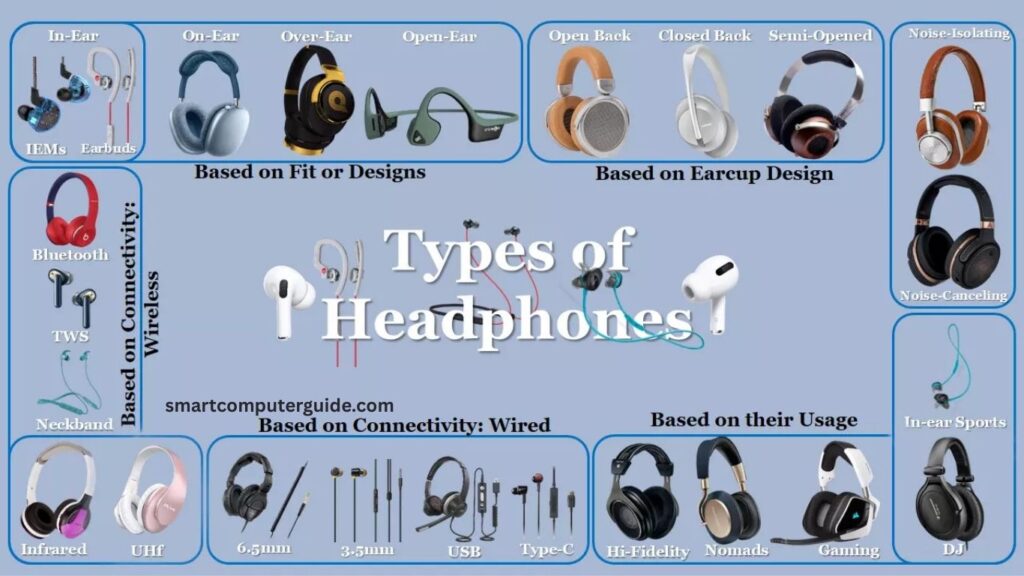
Choosing the right headphones is essential for both comfort and audio quality, as different types cater to different lifestyles and needs. From casual listeners to audiophiles, gamers, and fitness enthusiasts, the perfect pair enhances your experience, whether it’s enjoying music, attending calls, or gaming.
Headphones vary in design, functionality, and connectivity, including over-ear, on-ear, in-ear, wireless, and noise-canceling options. Understanding the key features, advantages, and limitations of each type helps you select a pair that fits your daily routine, listening habits, and personal style, ensuring maximum enjoyment and convenience wherever you go.
Read More: SSD Latency Spikes: Causes and Effective Solutions
Types of Headphones: Choosing the Best Option for Your Lifestyle
Headphones come in various types, each designed for specific uses, from casual listening to professional audio work. Understanding the differences helps you select the right pair for your lifestyle, whether for music, gaming, workouts, or studio work.
Wired Headphones
Wired headphones connect via a cable and don’t require charging. They are reliable for music, calls, and study sessions.
Examples: JBL Wired Headphone, Sony Wired Headphone, Logitech H111
Wireless Headphones
Wireless headphones connect via Bluetooth, offering freedom of movement. Ideal for travel, exercise, or online classes.
Examples: JBL Wireless Headphone, Sony WH-CH510, Boat Wireless Headphone
Bluetooth Headphones
Bluetooth headphones use wireless tech to connect easily to phones, laptops, or tablets. Compact and portable for daily use.
Examples: AirPods, Sony WH-1000XM4, JBL Tune 510BT
Over-Ear Headphones
Large headphones that fully cover your ears, providing deep, immersive sound. Perfect for music, gaming, or long listening sessions.
Examples: Sony WH-1000XM5, Bose QuietComfort 35, JBL Live 660NC
On-Ear Headphones
Sit on top of the ears without fully covering them. Lightweight and portable, suitable for short listening sessions or travel.
Examples: JBL Tune 500, Sony ZX Series, Skullcandy Riff
In-Ear Headphones (Earbuds)
Compact headphones that fit inside the ear. Easy to carry and ideal for students, travelers, and calls.
Examples: Apple EarPods, Samsung Galaxy Buds, JBL C100SI
Bone Conduction Headphones
Sit near the cheekbones and transmit sound through bones, keeping ears open to surrounding sounds. Safe for running or walking outdoors.
Examples: AfterShokz Aeropex, Shokz OpenRun, Vidonn F3
Gaming Headphones
Designed for gamers, offering precise sound effects and often including a mic for team communication.
Examples: Razer Kraken, HyperX Cloud II, Logitech G433
Sports or Workout Headphones
Lightweight, secure, and sweat-resistant, ideal for running, gym workouts, and outdoor activities.
Examples: JBL Endurance Run, Bose Sport Earbuds, Sony WI-SP510
Noise-Cancelling Headphones
Block external noise to provide a peaceful listening experience. Perfect for travel, study, or work in noisy environments.
Examples: Bose QuietComfort 45, Sony WH-1000XM4, Sennheiser Momentum 4
Studio or Professional Headphones
Designed for music production and editing, offering clear, unaltered sound. Used in studios and professional audio work.
Examples: Audio-Technica ATH-M50x, Beyerdynamic DT 770 Pro, Sennheiser HD 280 Pro
Frequently Asked Questions
What are the main types of headphones?
The main types include wired, wireless, Bluetooth, over-ear, on-ear, in-ear, bone conduction, gaming, sports, noise-cancelling, and studio headphones.
What’s the difference between wired and wireless headphones?
Wired headphones connect via a cable and don’t need charging, while wireless and Bluetooth headphones connect via Bluetooth, offering freedom of movement.
Which headphones are best for workouts?
Sports or workout headphones are lightweight, sweat-resistant, and designed to stay secure during physical activity.
Are noise-cancelling headphones worth it?
Yes, they block external noise, making them ideal for travel, study, or working in noisy environments.
What are over-ear headphones best for?
Over-ear headphones provide immersive sound, comfort for long sessions, and are great for music, gaming, or studio use.
Can bone conduction headphones damage hearing?
No, they transmit sound through bones and keep ears open, making them safer for outdoor use.
How do I choose the right headphones for my lifestyle?
Consider your use case, comfort, portability, sound quality, and whether features like noise-cancellation or wireless connectivity are important.
Conclusion
Choosing the right headphones depends on your lifestyle, usage, and audio preferences. From wired and wireless options to over-ear, in-ear, and specialized headphones for gaming, sports, or studio work, each type offers unique benefits. Consider factors like comfort, sound quality, portability, and extra features such as noise-cancellation or sweat resistance to find the perfect fit.